

Forgetting where you left your keys, losing a familiar name halfway through a conversation, or walking into a room and suddenly forgetting why you went there can feel like small things.
But when these moments start happening more often, it’s natural to wonder whether they’re simply part of getting older — or whether something else may be going on behind the scenes.
The presentation behind this page takes a different look at that question. Rather than focusing only on memory exercises or conventional approaches, it explores what may be happening inside the brain when recall becomes slower and mental clarity doesn’t feel quite as effortless as it once did.
One particularly interesting part of the explanation involves the relationship between the brain’s natural protective processes and something surprisingly familiar: sound.
When Memory and Sound Intersect
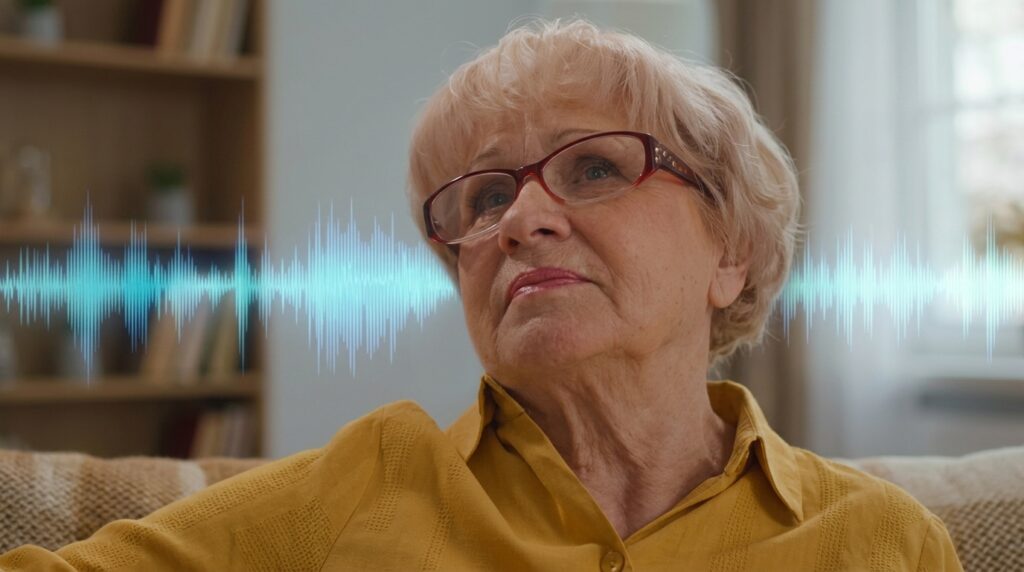
Think about how quickly an old song can bring back a memory you haven’t thought about in decades.
You may recognize the melody immediately. A familiar voice can suddenly bring back a place, a person, or a moment from years ago.
The presentation uses this connection as the starting point for a deeper question: could carefully selected sound frequencies interact with the brain in ways that go beyond simply triggering memories?
According to the presentation, researchers have been investigating how particular frequencies may interact with brain activity, including gamma-wave activity associated with functions such as attention, information processing, and memory.
That raises a much bigger question about what might be possible — and that’s where the full presentation goes deeper.
What the Full Explanation Explores
- Why memory and mental sharpness may change over time
- The presentation’s explanation involving iron, ferritin, and the brain’s natural protective processes
- Why researchers became interested in the connection between sound and brain activity
- What research around specific frequency ranges has suggested
- How the presenter says these ideas were eventually combined into a practical audio-based approach
Follow the Idea Further
If you’re curious about how these pieces are supposed to fit together, the full presentation walks through the research, the discovery process, and the approach developed from it.
Continue to the presentation to hear the complete explanation.